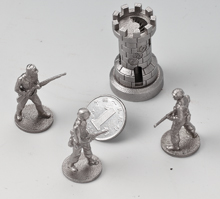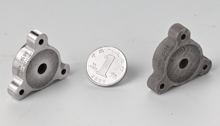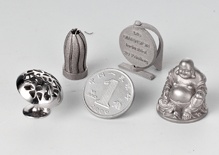

3D Printing Technical Specifications
1. Maximum build size of the metal 3D printer: 250 x 250 x 325 mm;
2. Layer thickness: 0.02 mm – 0.04 mm;
3. Achievable 3D printing accuracy: typical accuracy ±0.02–0.05 mm (accuracy depends on geometry and varies with part size, build orientation, material and post-processing method);
4. Post-processing: high-temperature annealing, polishing, welding and other processing;
3D Printing Material Properties
Stainless steel GP1 is a pre-alloyed stainless steel metal powder whose composition corresponds to US classification 17-4 and European 1.4542. This steel is characterized by good corrosion resistance and mechanical properties, with particularly excellent ductility in the laser-processed state, and is widely used in a variety of engineering applications.
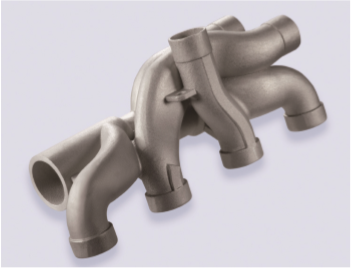
Material Data
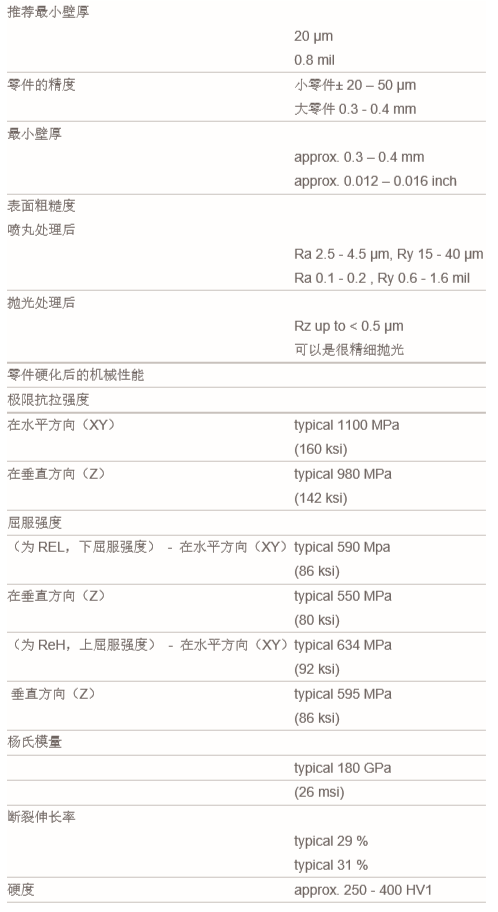
*Notes: 1. Proportional test pieces per Annex C of ISO 6892:1998 mechanical testing (E), with a 5 mm diameter in the neck region and an original gauge length of 25 mm. 2. Vickers hardness measurement (HV) per DIN EN ISO 6507-1. Please note that, depending on the method used for this measurement, the measured hardness value can depend on surface roughness and may be lower than the true hardness. To avoid inaccurate results, hardness should be measured on a polished surface.
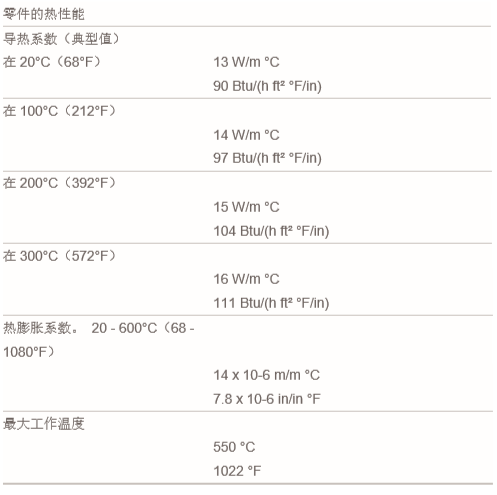
*All values are taken from documentation provided by the manufacturer of this specific material. No claim is made as to the accuracy of these data, since every individual application may vary. If you have any questions, please contact the manufacturer for product-specific information.