3D Printing Material Selection Guide
A material must suit the application to be successful. As products progress from concept and functional prototyping to production, the properties of any material become increasingly important. However, material properties can only be evaluated when the manufacturing process is taken into account: it is the combination of material and process that determines the characteristics. For example, an alloy processed by die casting has different properties when metal injection molded. Likewise, a thermoplastic will have different properties if injection molded rather than CNC machined.
Additive manufacturing (AM), or 3D printing, is unique. It differs from all other manufacturing processes, so even when using nearly identical alloys or thermoplastics, the material properties and characteristics of the parts produced differ. In terms of material properties this is not a question of better or worse; it is very important to recognize that the results will differ.
1. SLA Stereolithography Photosensitive Resin 3D Printing Material
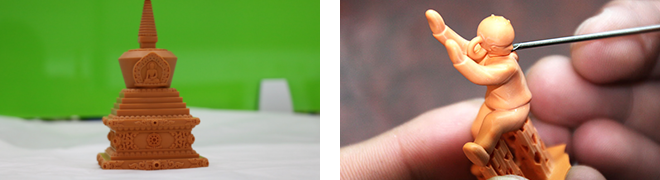
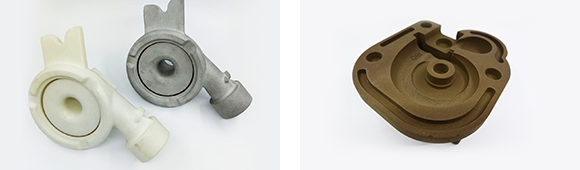
Milky white with a good texture and good strength, but relatively low toughness — small, thin parts tend to fracture brittlely. It is easy to sand, electroplate and paint. Photosensitive resin consists of two main parts: a photoinitiator and the resin itself (the resin being made up of prepolymers, diluents and a small amount of additives). The amounts of photoinitiator and diluent have an important effect on the curing speed and curing quality of photosensitive resin. When the proportions are appropriate, both curing speed and curing quality are good. It is therefore essential to choose mature, stable photosensitive resin 3D printing materials from major manufacturers. In terms of performance, there are also imported photosensitive resin materials offering high strength, transparency, high-temperature resistance and moisture-resistant waterproofing. In addition, composite ceramic 3D printing materials — a mix of porcelain-like, high-resolution ceramic powder and photosensitive resin (ceramic materials such as alumina (Al2O3), zirconia (ZrO2), hydroxyapatite (HAP) and tricalcium phosphate (TCP)) — are also available.
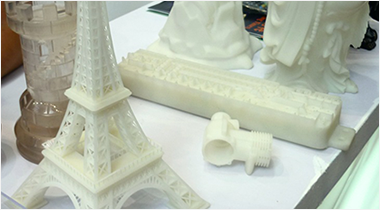
Relatively speaking, the printed layer marks on the surface are more obvious and rougher. However, its good strength, toughness, high impact resistance, strong solvent resistance and stable durability make it helpful for accurate functional testing and an ideal material for tooling and finished products. The 3D printing materials used in this technology include industrial-grade 3D printing materials and desktop 3D printer consumables.
3. SLS Selective Laser Sintering Powder 3D Printing Material
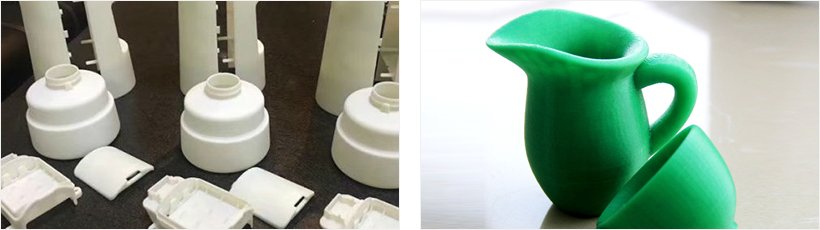
PA series nylon 3D printing materials: wear-resistant, high strength and stiffness, good chemical resistance, excellent long-term stability, high selectivity and detail resolution, biocompatible in accordance with EN ISO 10993-1 and USP, and approved for food contact under the EU plastics directive. Typical applications for this material are fully functional plastic parts of the highest quality, although the surface is relatively rough. There is also PA3200GF nylon glass-fiber material for deep-drawing dies or any other application requiring specific stiffness, high heat deflection temperature and low wear; and aluminum-filled nylon, typically used for parts with a metallic appearance under thermal load. Desktop-level LS laser-sintered PA12 nylon powder material is now also an option.